He’d run a 60-person engineering org for six years. He knew the material was cold. So when a recruiter called about a VP role, he gave himself two evenings to prepare.
Round one went well. In round two, the CFO asked how his team’s cost compared to the revenue it supported, and he didn’t have a number ready. In round three, a peer director asked why he was leaving, and the answer came out defensive. The offer never came.
Nothing he said was wrong. He just hadn’t prepared for what a senior loop actually checks. That’s what an interview preparation checklist is for.
What Belongs on a Senior Interview Checklist
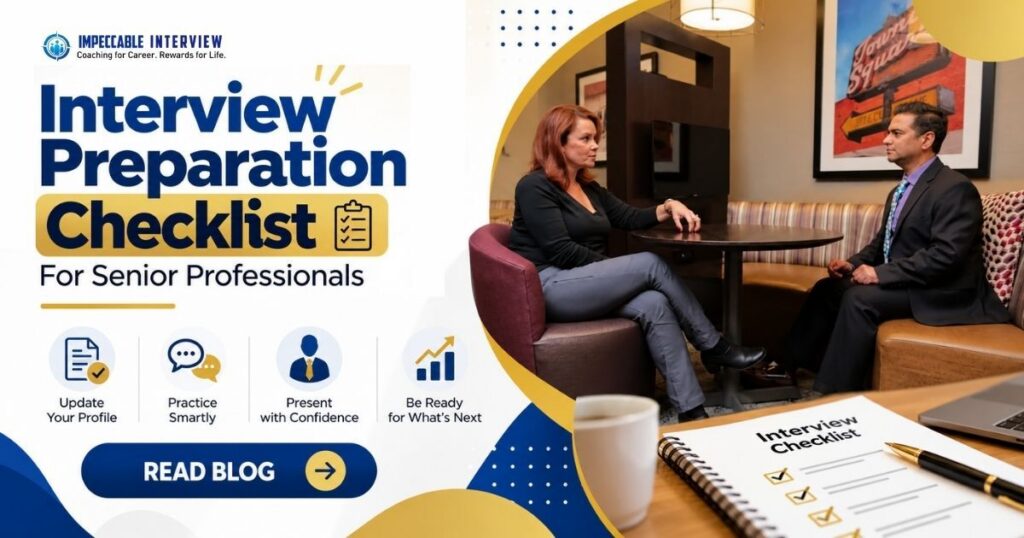
A senior interview checklist covers far more than practice questions. It confirms you know who’s on the panel and what each person is screening for, that your leadership results are backed by real numbers, that your exit story is clean, and that you’ve rehearsed the full loop out loud. Skip any of these, and the gap usually shows up in the round where it hurts most.
Why Experienced Candidates Skip the Checklist:
Checklists feel junior. Senior professionals have interviewed dozens of people themselves, so preparing like a new grad seems unnecessary.
But hiring and being hired are different skills. Hiring managers rarely have to explain their own career in 90 seconds, defend a call they made three years ago or put a number on a turnaround on the spot.
The "I'll Know It When They Ask" Problem
Experience gives you a deep bank of stories. It doesn’t organize them. Under pressure, candidates grab whichever story surfaces first, not the one that fits the question.
That’s where a written interview prep checklist earns its place. It forces the decisions before the room does: which result proves scale, which conflict shows judgment, which number answers the commercial question.
The PROOF Checklist
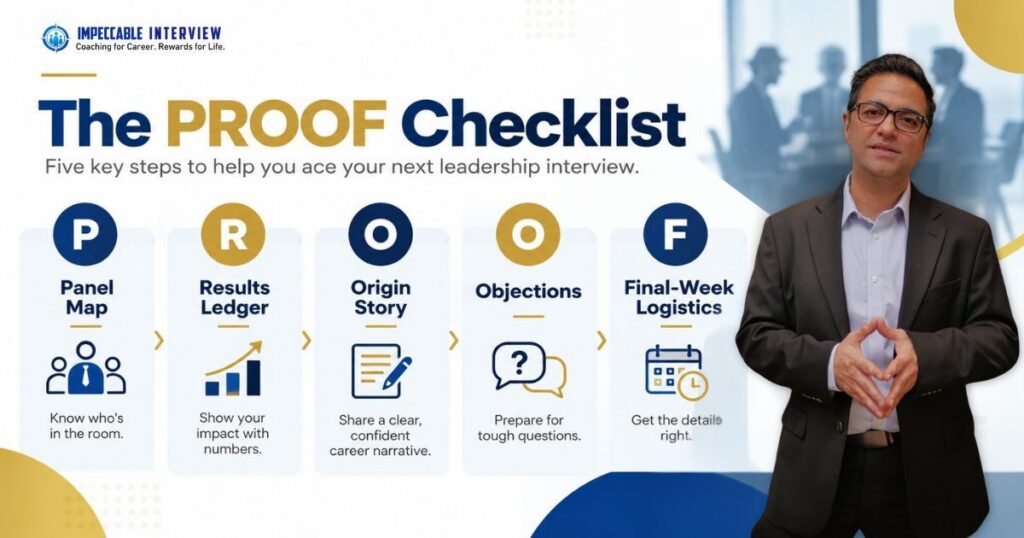
This is the checklist we walk senior clients through before any leadership loop. Five items, and each one maps to a common reason strong candidates lose offers they should have won.
- P – Panel map: List every interviewer, their role and what they likely own. A CFO, a peer and a future direct report will judge the same answer by different standards.
- R – Results ledger: Write down five to seven outcomes with numbers attached: revenue, cost, headcount, retention or delivery time. If you can’t quantify it, you’ll struggle to defend it.
- O – Origin story: Prepare a 90-second career narrative and a calm, honest answer on why you’re leaving. This is where senior candidates most often sound defensive.
- O – Objections: Name the two or three doubts a panel might have about you, such as a short tenure, a career gap or a missing domain, and prepare a direct answer for each.
- F – Final-week logistics: Confirm the interview format, read recent company news, prepare sharp questions for each interviewer and test your setup for virtual rounds.
Weak Prep vs. Coached Prep
Picture a director of product interviewing for a VP role at a growth-stage company.
Weak prep: She reviewed common leadership questions, reread her resume and skimmed the company website. When the CEO asked how she’d decide what to cut from a roadmap with a smaller team, she gave a thoughtful but general answer about prioritization. It sounded like a blog post.
Coached prep: She built her results ledger first. When the same question came, she described the quarter she cut three initiatives, how she explained the trade-off to sales and the customer retention figure that held afterward.
Same candidate. Same experience. One answer described a principle. The other proved she’d already done the job. That difference came straight from her interview preparation checklist.
What Executive Interview Preparation Looks Like in Practice
Real executive interview preparation starts earlier than most people expect. It begins with the business itself: how it makes money, what has changed in its leadership recently and what problem this hire is meant to solve.
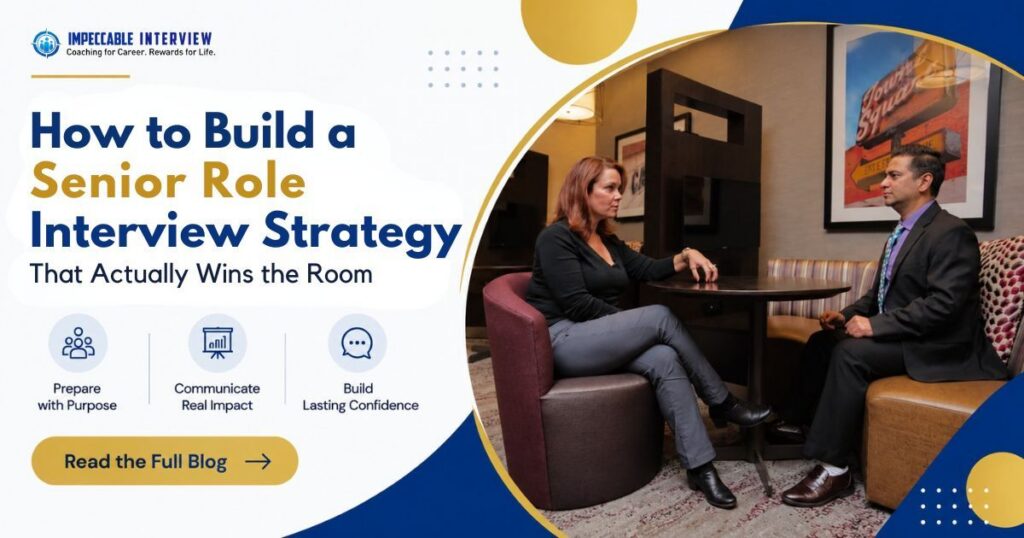
Then comes the harder part. You rehearse out loud with someone who will interrupt, ask for the number and push back when an answer runs long. A coach worth working with will also tell you which of your favorite stories to drop.
AI Can Polish Your Answers. It Can't Read the Room.
AI tools are handy for tightening a career summary, generating likely questions for a role or structuring a first draft of an answer.
What they can’t do is notice that your tone shifts when you talk about your last manager, or that your best story runs four minutes when the CEO has patience for one. Those signals only surface in live rehearsal with another person.
The Impeccable Interview Point of View
Most senior professionals who come to Impeccable Interview don’t need more interview tips. They need a structured way to confirm that everything the panel will probe has a prepared, honest answer.
A good interview preparation checklist isn’t something you tick off the night before. It’s how you find the weak spots while there’s still time to fix them.
Why Bay Area Leadership Loops Leave Less Room for Gaps
Hiring loops keep getting longer. Ashby’s talent trends data shows companies now run about 17.6 interviews per technical hire, up from roughly 11 in 2021, with a median of around 40 days from application to offer.
For senior candidates in Silicon Valley, where engineering, product and data leadership roles dominate, that means more interviewers, more cross-checking and more chances for an unprepared answer to surface. A clear interview preparation checklist keeps your story consistent whether the loop runs a week or a month.
How to Build Your Own Interview Prep Checklist
- Ask the recruiter for the full panel, then research each interviewer’s role and remit.
- Build your results ledger before you practice a single answer.
- Write and time your career story and your reason for leaving.
- List the objections a skeptical panelist might raise and draft a direct response to each.
- Rehearse the full loop out loud with someone who will interrupt you.
To see how other senior candidates have put this into practice, visit the Success Stories page, or read about Mahesh’s coaching background on the About Mahesh page.
Frequently Asked Questions
A strong interview preparation checklist for senior roles covers your panel, your quantified results, your career and exit story, likely objections and final logistics. It goes beyond common questions because senior loops test judgment, commercial awareness and consistency across several interviewers, not just how well you answer one question.
A standard checklist focuses on researching the company and practicing common questions. A senior interview checklist adds panel mapping, a results ledger with real numbers and prepared answers to likely objections. Senior candidates are judged on business impact and leadership decisions, so preparation has to prove both.
Plan for at least two weeks before a full leadership loop. Executive interview preparation isn’t about drilling hundreds of questions. It’s about researching the business, building your results ledger and rehearsing the full sequence aloud, which works better in focused sessions spread over time than in one long weekend.
AI can help you generate likely questions, summarize a company’s recent news and tighten written answers. It can’t judge how you come across in a live conversation. Use it for research and drafting, then test your interview prep checklist through mock interviews with a person who will push back.
The core checklist stays the same, but the stakes rise. Bay Area tech loops for senior roles often involve many stakeholders across engineering, product and the business. More interviewers mean more chances for inconsistent answers, so panel mapping and full-loop rehearsal matter even more here.
If you are preparing for a high-stakes interview, Impeccable Interview can help you sharpen your story, practice difficult questions, and show up with clarity when it matters most.